• Work
  • Trade
  • Insights
  • About
Menu

DEADRINGER PROJECTS

  • Work
  • Trade
  • Insights
  • About

Why Original Art Belongs in Healthcare Spaces

August 11, 2026

Healthcare environments are designed around clinical necessity — sightlines for staff, infection control, wayfinding for patients under stress. Art is easy to treat as decoration layered on afterward, if it's considered at all. But in a building where people spend some of the hardest hours of their lives, what's on the walls matters more than it does almost anywhere else.

We spent three years working with Emory Healthcare on exactly this question: how do you build a real art program — not just framed prints — across an active healthcare system, at scale, without disrupting clinical operations?

The scope of doing this properly

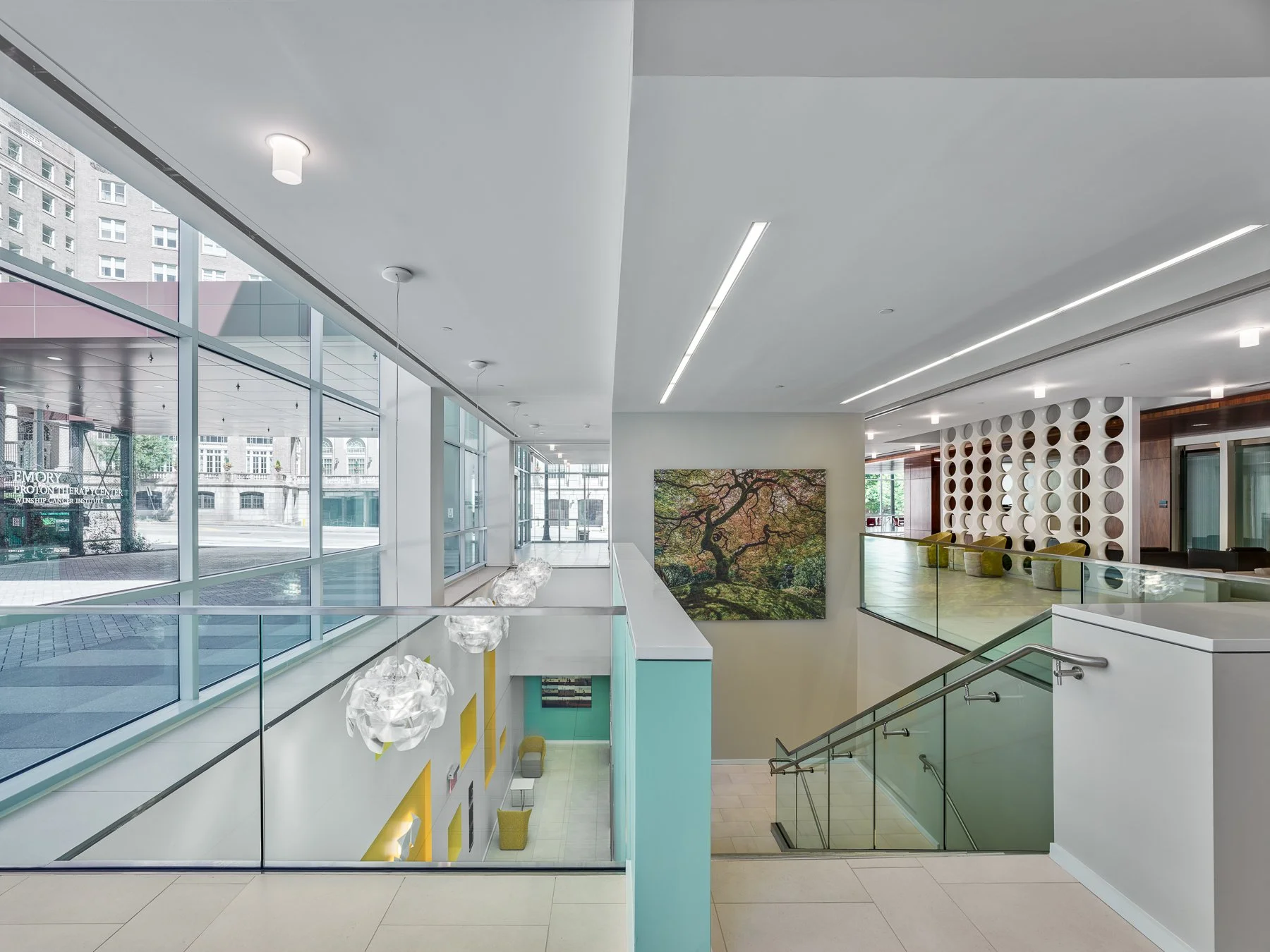
The Emory Healthcare program touched nine new specialty outpatient clinics, a 14-story, 358,000-square-foot medical superblock, a six-story diagnostic and treatment center, a 14-story medical office building, and a multi-story education and oncology center. That range is the point: a lobby, a waiting room, and a private patient room are three completely different environments with different needs, and a real art program treats them that way rather than applying one solution everywhere.

Lobbies can hold larger, more ambitious statement pieces — the first impression of the building. Waiting areas benefit from work that's calming without being sterile; people spend anxious, unhurried time there and notice more than they would passing through a hallway. Private patient rooms are the most intimate and the most constrained: the art has to hold up to being seen at close range, day after day, by someone who didn't choose to be there.

Local artists, real placement

Throughout the program, we placed original and limited-edition fine artwork from local artists, including Krista Clark, Rocio Rodriguez, Joe Camoosa, Kirstin Mitchell, Namwon Choi, Don Cooper, Donna Mintz, and others. Sourcing locally wasn't incidental — it meant the art reflected the community the hospital actually serves, and it made a program of this size logistically realistic to execute and maintain.

What this means if you're planning a healthcare space

A few things consistently matter in clinical art programs: durability and ease of cleaning have to factor into material choices, not just aesthetics; placement should be planned by room type, not applied uniformly; and the program should align with the facility's brand identity — ours was developed alongside a refreshed brand for Emory's creative direction, so the art reinforced the same message as everything else in the building, rather than existing separately from it.

Art in a healthcare setting isn't a finishing touch. It's part of the experience of the building itself, for patients, families, and staff who are there far longer than they'd choose to be. If you're planning new construction, a renovation, or a system-wide refresh and want to talk through what an art program could look like, book a consultation.
In Healthcare
Comment

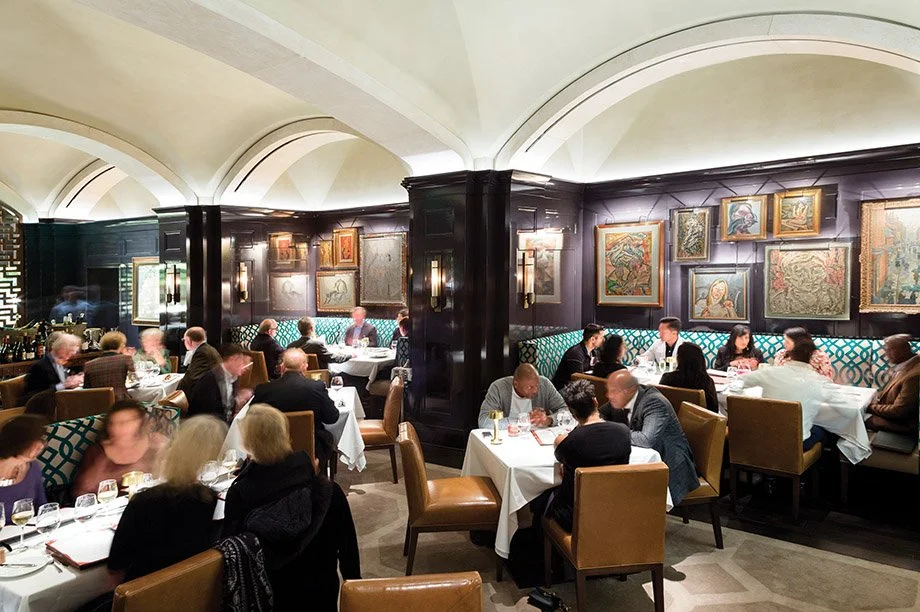
Atlas Restaurant at The St. Regis Hotel in Atlanta

What Goes Into a Corporate Art Program (And Why It's Worth Doing Right)

August 6, 2026

Walk into most corporate lobbies or hotel restaurants and you'll see the same thing: art chosen to fill wall space rather than say anything. It's inoffensive, forgettable, and usually purchased in bulk from a catalog. That's not a knock on the buyer — most companies don't have anyone on staff whose job is to think about art. But it's a missed opportunity, because the art in a space does real work, whether anyone's paying attention to it or not. It signals what a brand values, gives visitors and employees something to notice, and can turn a functional space into a memorable one.

Art as part of the brand, not an afterthought

The projects that work best start early, not as a last-minute decorating decision after the architecture and interiors are locked in. When we curated the art program for Atlas Restaurant at The St. Regis Hotel in Atlanta, the goal wasn't just to hang paintings — it was to build a visual identity for the space. We paired original work from mid-career artists across the Southeast with pieces on loan from the Tavistock Group's collection, including works by Picasso, Matisse, Lucian Freud, and Francis Bacon. The result reads as one considered program instead of two disconnected sets of art, because the pairing was intentional from the start.

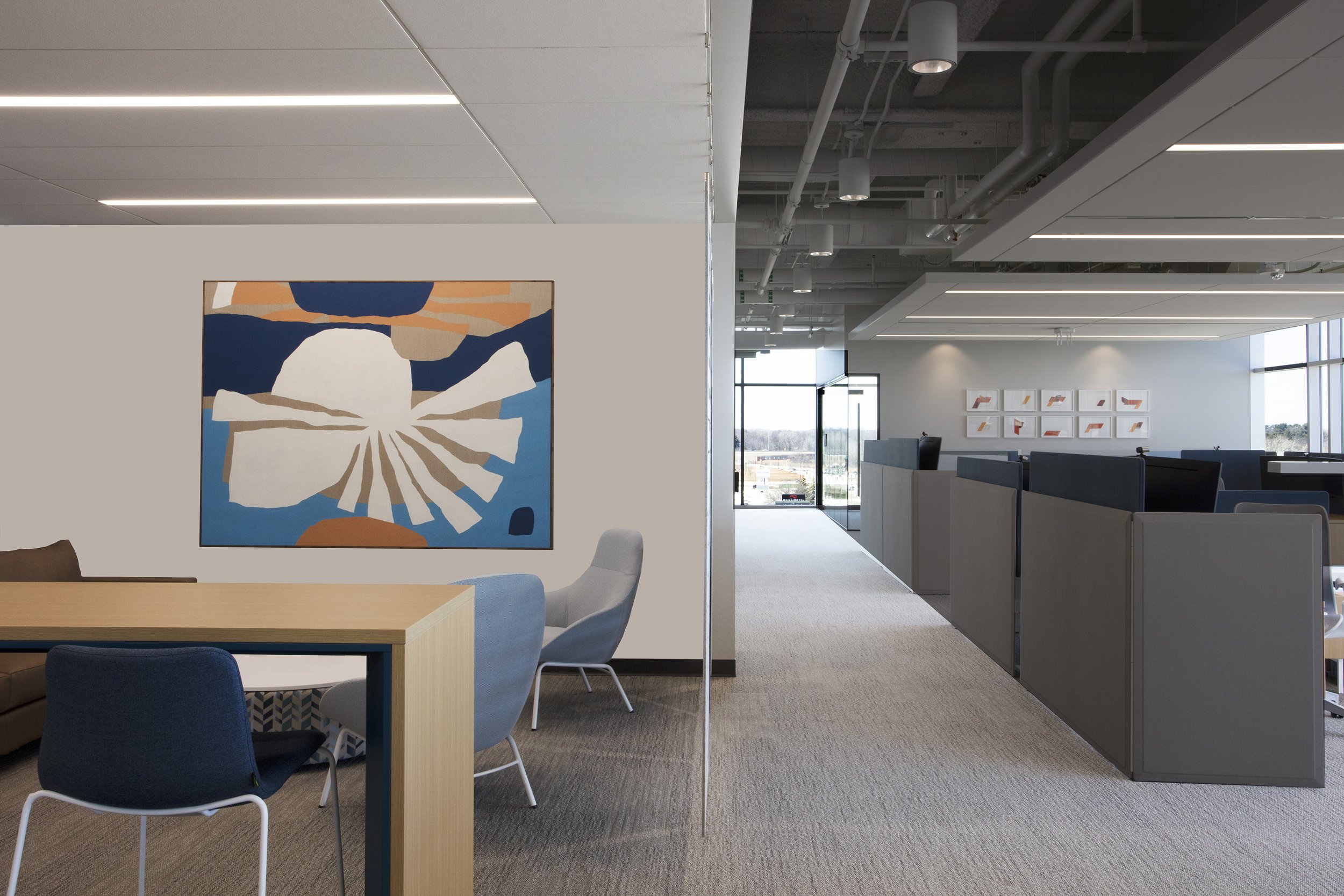
Cody Hudson’s artwork installed at the Breakthrough Collaboration Hub.

The same logic applied on a much larger scale at the Breakthrough Collaboration Hub, developed with U.S. Venture and the Green Bay Packers organization at the U.S. Venture Center in Titletown. More than 200 original artworks were installed across the space, featuring artists including Michelle Grabner, Cody Hudson, Sarah Leuchtner, and Shir Ende. A project at that scale isn't about picking pretty pictures — it's a coordination exercise: matching the volume of art needed to the size and function of the space, sourcing enough strong regional and national artists to fill it without diluting quality, and making sure the final program feels cohesive room to room rather than assembled piece by piece.

What the process actually looks like

A corporate or hospitality art program generally involves a few consistent steps, regardless of scale: understanding the brand and the space first, before a single piece is chosen; sourcing original work from artists whose practice fits the project, often emerging or regional talent rather than only established names; coordinating with existing collections or stakeholders when a client already owns work worth incorporating, as with the Tavistock Group pairing at Atlas; and managing the unglamorous but critical logistics — framing, sizing, shipping, and installation — that determine whether a great concept actually makes it onto the wall intact and on schedule.

Why it's worth the effort

Original art is one of the few elements of a commercial space that visitors will actually stop and look at. Done well, it becomes part of how people remember the space — and part of how they remember the brand behind it. Done as an afterthought, it just becomes wallpaper.

If you're planning a renovation, a new build-out, or a rebrand and art hasn't come up yet, it's worth bringing into the conversation earlier than most people do. Book a consultation to talk through what a program could look like for your space.

In Corporate & Hospitality
Comment

EXPO is back

April 9, 2022

EXPO is back!

Read More
Comment

Latest Posts

Featured
Why Original Art Belongs in Healthcare Spaces
August 11, 2026
Why Original Art Belongs in Healthcare Spaces
August 11, 2026
Read more →
August 11, 2026
What Goes Into a Corporate Art Program (And Why It's Worth Doing Right)
August 6, 2026
What Goes Into a Corporate Art Program (And Why It's Worth Doing Right)
August 6, 2026
Read more →
August 6, 2026
EXPO is back
April 9, 2022
EXPO is back
April 9, 2022

EXPO is back!

Read more →
April 9, 2022