Nature morte sur table de marbre
Nature morte sur table de marbre
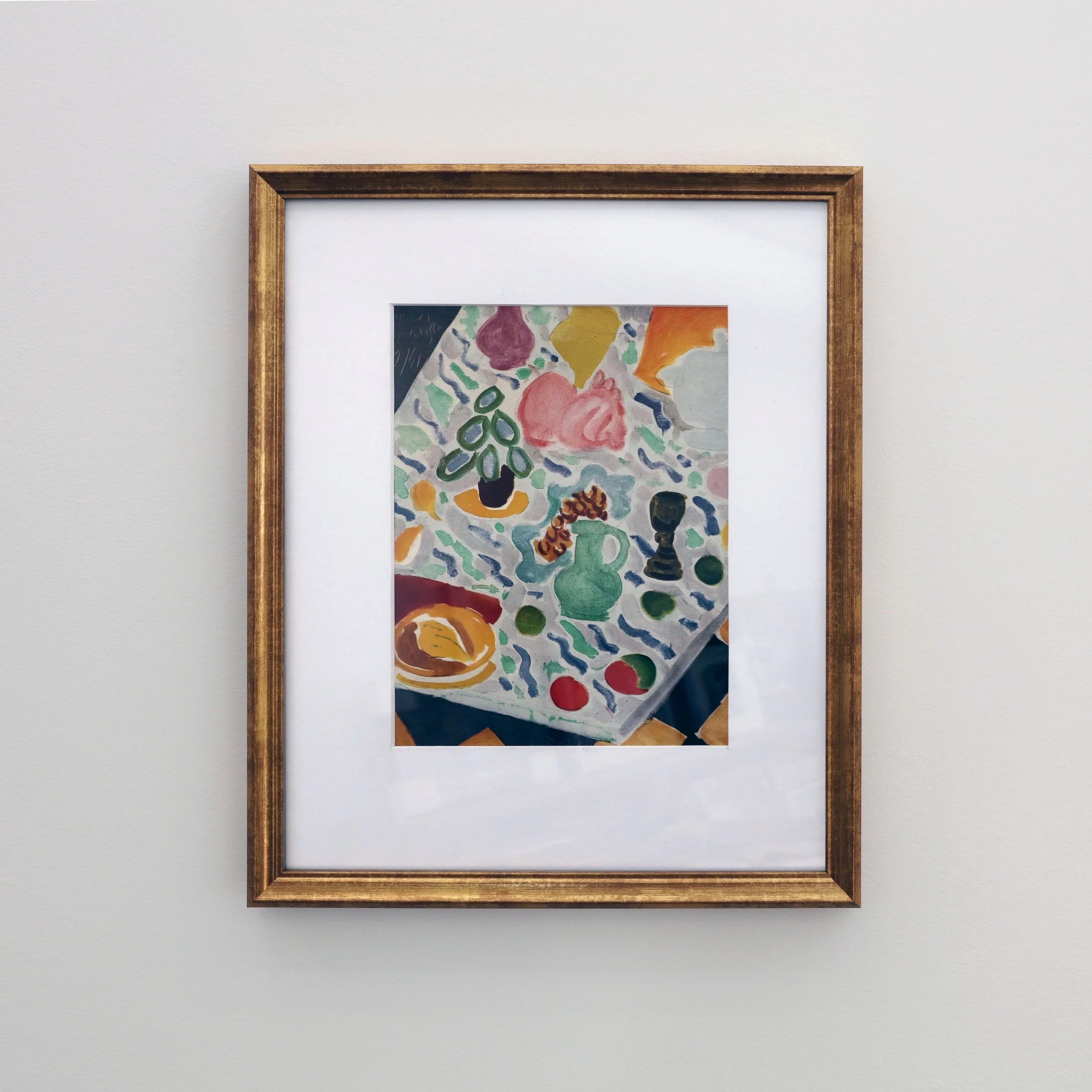
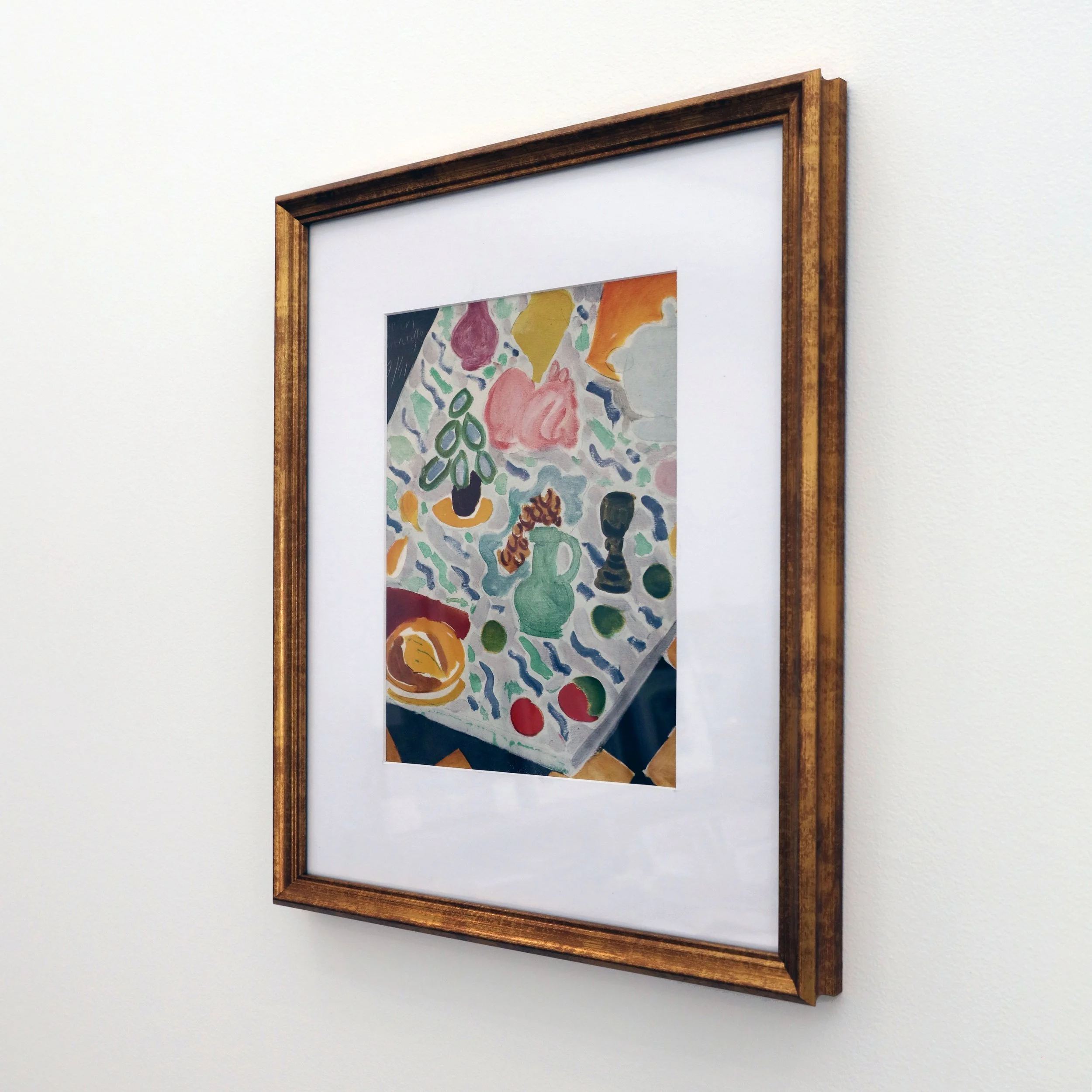
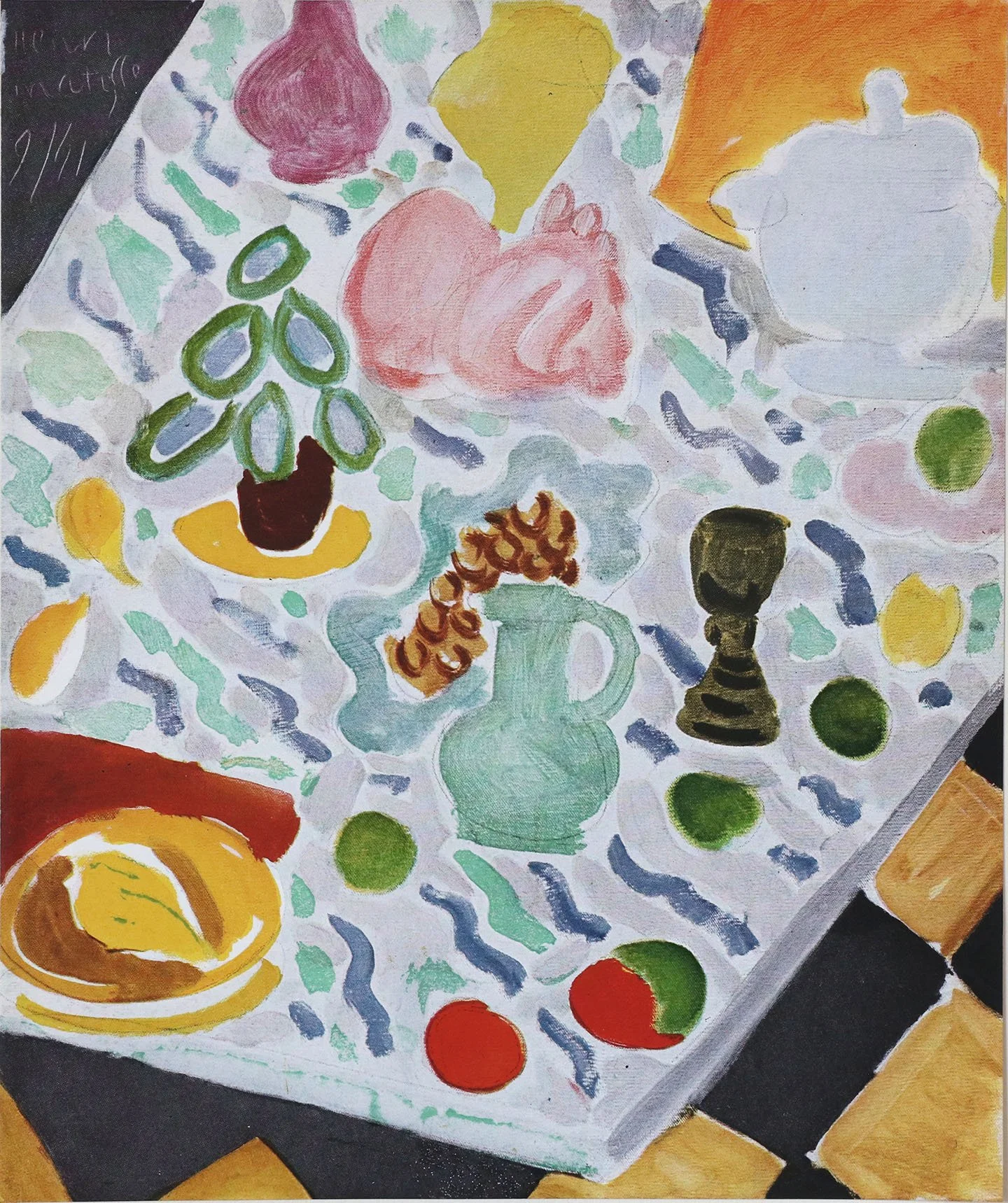
Henri Matisse, Still Life (Nature morte sur table de marbre), 1941 | Vintage 1946 French Lithograph, Framed
A quiet, jewel-toned still life by Henri Matisse, one of the defining painters of the twentieth century.
This plate comes from Matisse: Paintings 1938–1946, a first-edition portfolio. It was printed in France in 1946 and published jointly by Lindsay Drummond Ltd. in London and Les Éditions du Chêne in Paris. Now nearly 80 years old, the print has been matted and framed with archival materials in a gilded gold wood frame behind conservation clear glass, with a bracket on the back so it’s ready to hang.
At 17 x 14 inches framed, this piece suits a powder room, a bedside wall, a bookshelf vignette, or a gallery wall. It offers a museum-caliber name and a warm gilt finish at an accessible scale.
Details
Artist: Henri Matisse (French, 1869–1954)
Title: Still Life (Nature morte sur table de marbre), September 1941
Original painting: oil on canvas, 46 x 38 cm
Medium: vintage color offset lithograph
Source: Matisse: Paintings 1938–1946, intro. by Denys Sutton; first edition, printed in France, 1946 (Lindsay Drummond Ltd., London / Les Éditions du Chêne, Paris)
Image size: 10.25 x 8.5 in
Framed size: 17 x 14 in
Frame: gilded gold wood, archival mat and mounting, conservation clear glass
Hanging: bracket installed, ready to hang
Henri Matisse (1869–1954) was a French painter, sculptor, and printmaker, and with Pablo Picasso one of the most influential artists of the modern era. He first drew wide attention in the early 1900s as a leader of the Fauves, the “wild beasts” whose bold, unnatural color shocked Paris. Over his long career he kept returning to the same subjects: interiors, open windows, figures, and tabletop still lifes, which he painted with flattened space, rhythmic pattern, and saturated color. In his final years, when illness made painting difficult, he turned to cutting shapes from painted paper, producing the joyful cut-outs that are among his most beloved works. His art is held by major museums around the world, including the Museum of Modern Art, the Art Institute of Chicago, and the Centre Pompidou.